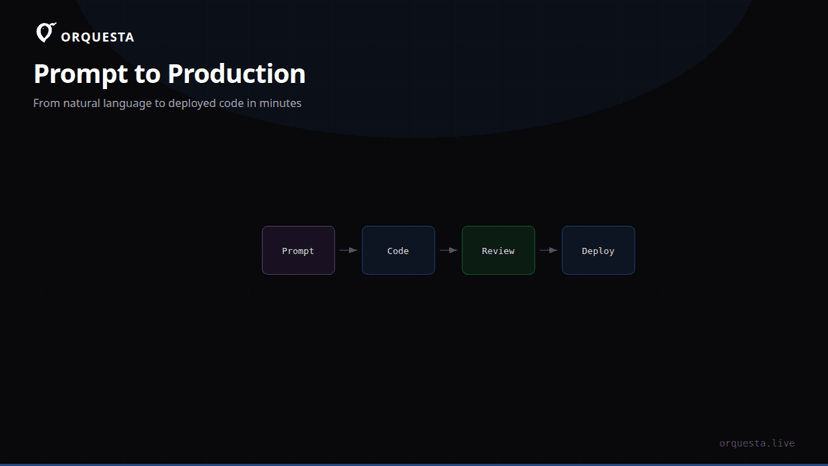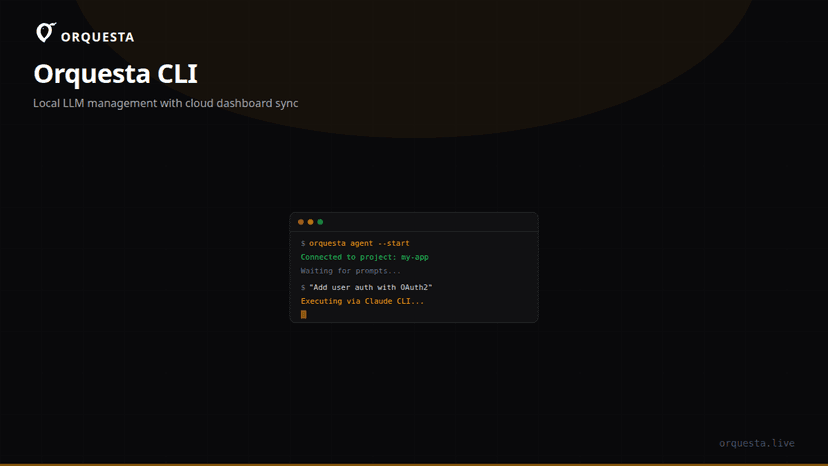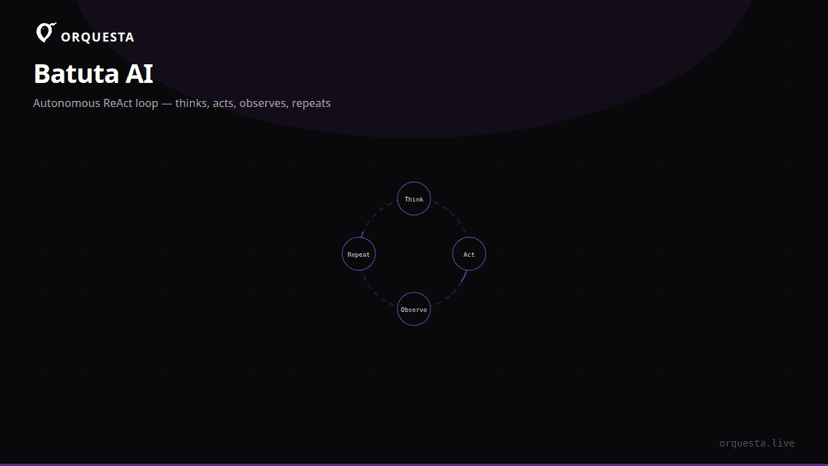
Harnessing the power of autonomous AI agents offers tremendous potential for accelerating development workflows. However, the fear of unintended consequences can make teams hesitant to fully embrace this potential. With Orquesta's quality gates, we find a middle ground that offers both speed and control — enabling AI agents to work autonomously while keeping humans in the loop.
The Challenge of Autonomy
Autonomous AI agents can generate code, open pull requests, and even deploy changes without direct human intervention. While this level of automation is appealing, it raises legitimate concerns about reliability, security, and adherence to coding standards. Just because an AI can make changes doesn't mean it should do so without oversight.
Balancing Act: Speed vs. Control
Our approach to quality gates ensures that AI agents remain productive without going YOLO — the reckless execution of changes without human oversight. We achieve this balance by simulating changes first, allowing team leads to review the diffs and sign off on them before any real execution takes place.
The key here is the simulation phase. Before an AI agent executes any change, it runs in a 'sandbox' mode, generating a preview of what it plans to do. This includes creating diffs, showing potential impacts, and even running tests in a simulated environment.
# Example Claude simulation configuration
simulate:
  steps:
    - name: Generate Diffs
      command: "git diff"
    - name: Run Tests
      command: "make test"
    - name: Preview Deploy
      command: "./deploy-preview.sh"
This configuration runs a series of checks and simulations, mirroring what the AI agent would perform in a real execution. The output is then available for human review.
The Role of the Team Lead
Team leads play a crucial role in this workflow. Once the AI agent has completed its simulation, the team lead is alerted to review the proposed changes. This step is crucial, as it allows the team to maintain code quality and ensure compliance with both company standards and regulatory requirements.
The team lead has the ability to:
- Review diffs and check for inconsistencies.
- Ensure adherence to the team's coding standards, as defined in
CLAUDE.md. - Verify that all simulated tests pass successfully.
- Provide feedback or request changes before execution.
- Sign off on the changes to allow the AI agent to proceed with the real execution.
This process ensures that while AI agents handle much of the heavy lifting, humans remain in control of the final approval.
Real-World Application
Consider a scenario where a team is tasked with refactoring a legacy system. The AI agent can be prompted to handle initial code changes across the codebase. The simulation phase provides an opportunity for the team lead to review extensive changes and ensure they align with the project's long-term goals.
The agent generates diffs for each change, running automated tests to verify functionality. The team lead reviews these outputs against the established guidelines in CLAUDE.md. Only after thorough review and approval, the changes are merged and deployed.
The result? The team benefits from the speed and efficiency of AI-driven changes, while maintaining a high level of oversight and quality assurance.
Keeping an Audit Trail
An essential aspect of quality gates is maintaining an audit trail. Orquesta logs every prompt, response, and simulated change, providing a comprehensive history of each action taken by AI agents and the corresponding human decisions.
This audit trail serves several purposes:
- It provides transparency into the decision-making process.
- It facilitates troubleshooting by tracing back the origins of any issues.
- It supports compliance with regulatory requirements that mandate auditability.
Conclusion: Productive AI with Human Oversight
Orquesta's quality gates offer the perfect balance between leveraging the power of AI and maintaining human oversight. By simulating changes and requiring team lead approval before execution, we prevent the risks associated with autonomous deployments while still reaping the benefits of AI efficiency.
This structured approach not only enhances productivity but also builds trust in AI-driven processes, paving the way for even greater integration of AI in software development workflows.