Watching your AI agent execute code line by line instead of waiting for a final output offers a transformative approach to debugging. Real-time log streaming, a key feature of Orquesta, is a game-changing capability that allows developers to catch mistakes early, understand the decision-making process of AI, and build trust in the code generated by AI agents.
The Traditional Debugging Approach
In traditional AI and software development workflows, debugging often involves a cycle of writing code, running it, and then sifting through final outputs or error logs to understand what went wrong. This approach is reactive and can lead to frustratingly long feedback loops, especially when dealing with complex AI models or systems where outputs may not always be deterministic or easily interpretable.
Analyzing static logs after execution often feels like looking at a crime scene photo: you see the aftermath but miss the dynamic, step-by-step process that led to the final state. This is especially challenging in AI environments where understanding the rationale behind each decision is crucial.
Enter Real-time Log Streaming
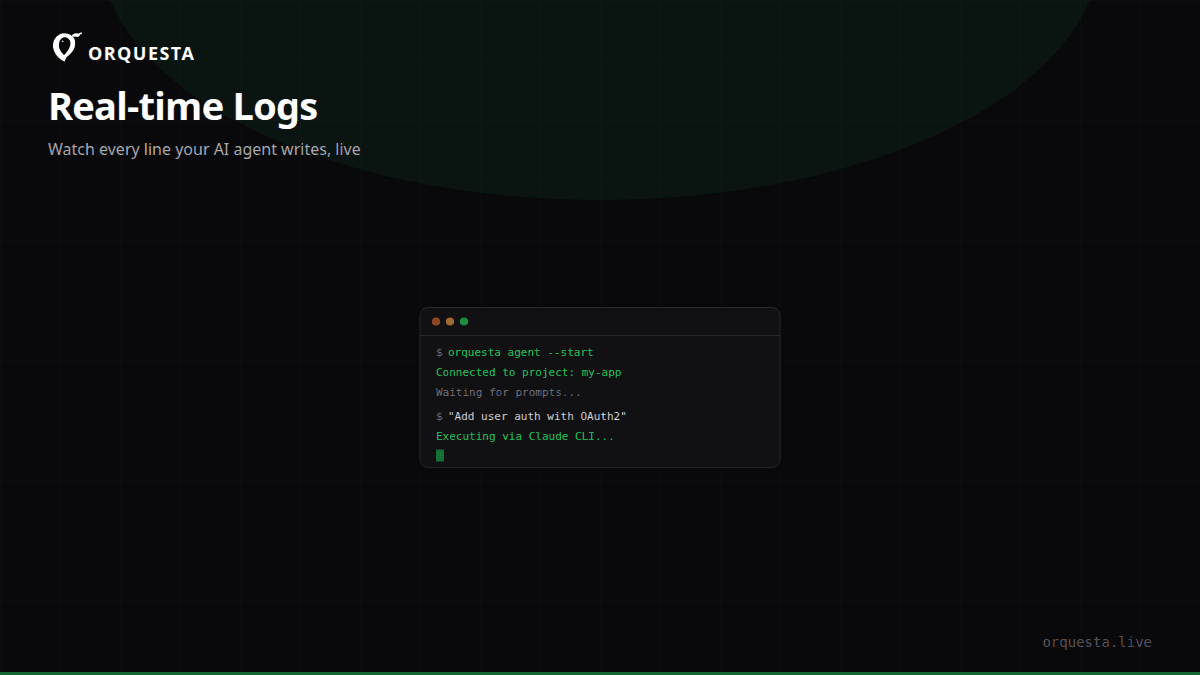
With Orquesta's real-time log streaming, developers have the opportunity to watch AI agents execute tasks line by line, in real-time, directly on their own machines. This shift from post-mortem analysis to live observation changes the debugging landscape significantly.
Advantages of Real-time Log Streaming
-
Immediate Feedback: By observing the AI's decision-making process as it happens, developers can identify incorrect logic or assumptions immediately. This reduces the time spent on backtracking and allows for quicker iterations.
-
Contextual Understanding: Seeing each step provides context that is often lost in final output logs. Developers can track variable changes, decision branches, and system interactions as they happen.
-
Trust Building: Transparency is key in AI development. Watching an AI agent's every move enhances trust in its operations and outputs, as developers can verify that each action aligns with expectations and standards.
How Orquesta Facilitates Real-time Debugging
Orquesta's architecture is designed to leverage real-time log streaming effectively. Here's how it works:
-
Local Execution: By running the AI agent locally using Claude CLI, Orquesta ensures that all execution happens within your infrastructure, maintaining data privacy and security while providing a direct window into the agent's operations.
-
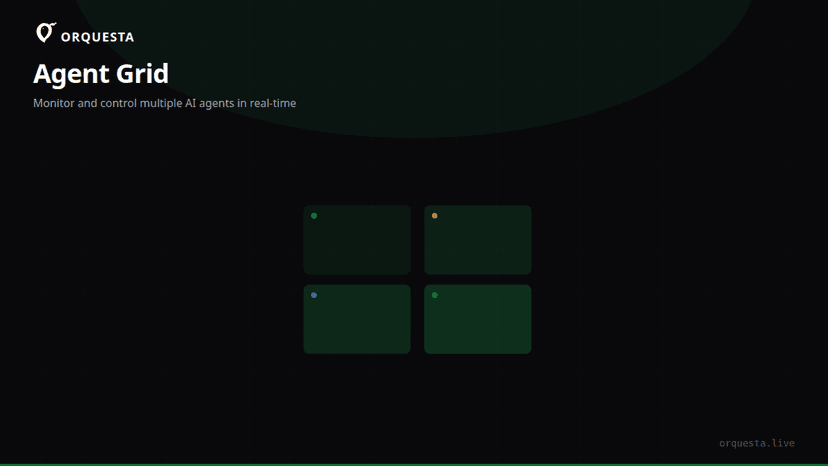
Agent Grid: The Agent Grid feature allows you to monitor multiple agents from a single interface. Each agent's terminal displays live logs as they execute tasks, which is crucial for complex systems where multiple agents may interact or depend on each other.
-
Streaming Terminals: Live terminals stream every line of output and command execution in real-time. Whether you're running a script, making an API call, or handling file operations, you see it all as it unfolds.
-
ReAct Loop: The Batuta AI's ReAct loop (Think > Act > Observe > Repeat) is particularly effective for autonomous SSH execution. By observing each step in the loop, developers gain insight into the agent’s dynamic decision-making process.
Here’s a simplified example of what a stream might look like:
# Starting execution
Connecting to server...
# Think: Deciding on file operation
Checking file existence: /path/to/file
# Act: Executing command
Command: ls -l /path/to/file
# Observe: Checking output
File exists, proceeding with read operation
# Repeat: Next action
Building Confidence in AI
Real-time log streaming is more than just a debugging tool; it's a foundation for building confidence in AI systems. As AI continues to integrate into critical systems, the ability for developers to trust and verify AI behavior becomes increasingly important.
-
Quality Gates: Orquesta includes quality gates that simulate changes before real execution, allowing team leads to sign off on AI-generated code. This is supplemented by the CLAUDE.md sync, ensuring coding standards are enforced in every execution.
-
Auditability: Every prompt, log, diff, and cost is recorded, providing a comprehensive audit trail. This transparency is crucial for both compliance and post-mortem analysis when issues do arise.
Conclusion
Real-time log streaming turns debugging into a proactive process. By enabling developers to see AI actions as they occur, it facilitates quicker iterations, deeper understanding, and greater trust in AI systems. As we continue to push the boundaries of what AI can achieve, tools like Orquesta that offer real-time insights and control will be integral to creating robust, reliable AI applications.